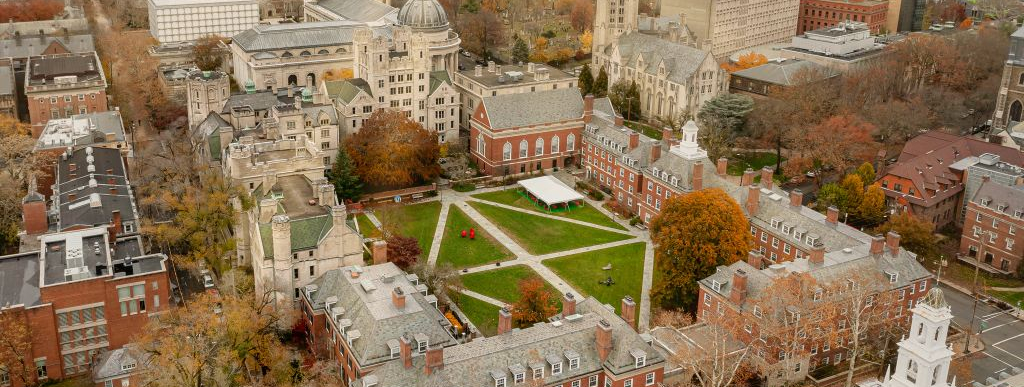
It’s one of the most common — and most stressful — questions students ask during the college search process: What if I don’t know what I want in a college? In this episode of the Just Admit It! podcast, IvyWise admissions experts Tasha and Christine break down exactly how students can navigate the college search when they feel unsure. The good news? Feeling undecided is normal — and manageable.
Key Takeaways
- Being undecided is normal. Many students don’t know exactly what they want in a college or major — and that’s okay. The college search is designed to help students explore and clarify their priorities.
- Start with self-reflection. Think about your academic interests, preferred learning environment, geographic comfort, and budget to help narrow your options on what college you should attend.
- Academic flexibility matters. If you’re unsure what you want to study, look for colleges that allow students to explore multiple majors, delay declaring until sophomore year, and easily change programs.
- Location impacts your experience. Geography affects climate, proximity to family, and overall well-being, even if it doesn’t seem important at first.
- Learning environments vary widely. Consider class size, access to faculty, and academic support services to determine where you’ll thrive.
- Prioritize fit over prestige. Rankings and brand names matter less than finding a school that aligns with your academic, social, and personal needs.
- Build a balanced college list. Include a mix of reach, target, and likely schools, and don’t be afraid to explore different types of institutions.
- Engagement helps clarify fit. Campus visits, virtual tours, conversations with admissions officers, and even social media can provide valuable insight into student life.
- Undecided students should plan carefully. Some competitive or capacity-limited programs are hard to enter later, so guidance from a counselor can be especially helpful.
- The process leads to self-discovery. While stressful at times, the college search often helps students better understand themselves, their values, and their goals.
- Episode Transcript
Tasha:
Hi there. Welcome to Semester 12, Episode 4 of IvyWise’s Just Admit It! podcast, where former deans and directors of admission give expert insight into the complex college admissions landscape. I’m Tasha, your host. I’m an admissions counselor at IvyWise, a former international admissions officer at USC, and a former assistant director of international admissions at Boston University.
This season on the show: FAQs in college admissions. We’ll be spending each episode focusing on a different frequently asked question. We’ll be breaking it down and answering it thoroughly. On today’s episode: What if I don’t know what I want in a college?
And to help me answer this question is my colleague, Christine. Hi Christine. Could you please introduce yourself?
Christine:
Yes, absolutely. Thanks Tasha, and thanks so much for having me today. My name is Christine and I’m an admissions counselor here at IvyWise. Prior to IvyWise, I spent about four years working in the undergraduate admissions office at Boston University, which is something Tasha and I have in common.
While I was on the board of admissions at BU, I primarily read domestic applications for freshmen and transfer admission to all of BU’s undergraduate schools and colleges, which consisted of a wide variety of academic programs. Everything from arts and sciences to engineering, business, health sciences, and fine arts.
And then after my time in admissions, I went on to work in university recruitment for a number of years where I managed internship and new grad hiring programs for a big four accounting firm as well as a few different tech companies. After that, I spent some time at MIT where I advised students on the pre-health track, and I supported them as they applied to medical school.
Tasha:
Amazing. Wow. Really a wealth of experience. Thank you so much, Christine, for joining us again. Alright, so let’s try to hop into this very broad question. So, what if a student doesn’t know what they’re looking for, what they want in a college? What other questions could they maybe start asking themselves to try to get to an answer?
Christine:
It’s helpful to understand that students aren’t alone in this. It’s very common to not know exactly what you want in a college. That’s why starting your college search process early, talking to a lot of people, really doing some exploratory time for yourself, and thinking about what you’re interested in can help.
I think the first question for a student to ask themselves is: What are they interested in? Do they have any idea of what they’d like to study? Sometimes it’s a good exercise to think about what classes you enjoy in high school and why. What are your favorite classes? What do you enjoy about them? If you are a student who knows that you’re interested in a particular academic program, it’ll be important to target colleges that offer what you want to study. Not all schools out there have a film and television program, for example. On the other hand, if you’re not sure what you want to major in, you’ll likely want to explore schools that offer academic flexibility and allow students the opportunity to take courses across many different subject areas.
Another question you might want to ask yourself is: Where do I want to be geographically? Location can be an important consideration for some students. It’s not as important for all. Some questions to ask yourself include:
- Is being close to home or close to a major city or airport important to you?
- Does a small college town or a larger urban environment sound more attractive to you?
- Is weather an important factor you’re considering?
These are all good questions to start with.
The next question you might want to ask yourself is: Do I have a budget? When considering where to go to college, it’s important to ensure that you and your family are making a financially sound decision. While you won’t know exactly the amount of money an institution would cost you until you receive your acceptance letter with your financial aid packages.
Private colleges and universities are considerably more expensive than public institutions, particularly in your state of residence. That being said, many colleges also offer a wide variety of merit-based scholarships for students, and some schools are committed to meeting the financial need of every student who is admitted.
When I work with families, I typically recommend a mix of adding both public and private institutions to their college list and applying to scholarships whenever possible. Your high school guidance counselor is also a great resource, as they might be aware of local scholarships for you to apply to.
Tasha:
Yeah, Christine. I think that’s absolutely right and obviously in addition to “do I have a budget?” — if the answer is yes, then “what is my budget?” Is there any flexibility around it? Thinking about work-study programs, just different factors that might be a part of your bigger financial picture when it comes to college is really important.
Alright, I wanted to introduce another question that students could ask themselves to try to pinpoint what kind of college they’re interested in, and that’s: What kinds of educational environments do I thrive in? It’s important to think about what types of environments you enjoy.
Christine:
Different educational environments can mean a lot of things. One factor that immediately comes to mind is class size — the access you have to faculty. You should also consider whether you want to utilize academic or career support services, such as tutoring, essay writing workshops, career coaching, resume building, or interview prep.
There are many different types of environments out there, so a few questions to ask yourself are:
- Do those resources appeal to you?
- Did you enjoy small, seminar-style courses in high school?
- Do you thrive more independently, or do you enjoy self-paced learning?
Most universities publicize their average class sizes and student-to-faculty ratios, as well as the specific types of academic and career support they offer. These are vital things to look for when researching.
Tasha:
I’d also highlight the importance of one-on-one interaction with professors. Some students prioritize that, while others feel more comfortable in larger, lecture-style classrooms with TAs and different formats.
At a larger university, you might be exposed to a whole range of learning environments; they often have smaller classrooms available alongside the big lectures. However, at smaller colleges, your largest class — even a big Intro to Biology or Anthropology — might only be 50 students at most. The norm there is the smaller classroom.
The next step is to ask: What are my priorities? This question encompasses everything else. Once you’ve looked at all these factors, you need to figure out how to rank them. This answer is different for every student. At IvyWise, we help students determine those priorities by helping them understand their interests and what is most important to them.
Christine, is there anything else you do in particular to help students identify their priorities in this context?
Christine:
I think those questions start in our very first meetings with students and families. I always highlight that my goal as a counselor is to find colleges where students will thrive academically and socially and be happy. Many students get caught up in rankings or specific name brands, but there are other critical factors to consider.
Beyond basic academic offerings, we look at things we haven’t touched on yet, such as:
- Research opportunities and internships.
- Study abroad programs.
- Career placement rates.
- Extracurricular activities and campus culture.
Do these factors truly align with your interests and goals? There are so many colleges and universities out there. Many of us at IvyWise have had the opportunity to visit campuses all over the country — and even the world — and we’re happy to share those experiences. Engaging in these exercises to figure out a student’s priorities helps us build and eventually narrow down the list of colleges where they will ultimately apply.
Tasha:
Thank you, Christine. So, that was our section on questions, and now I’m going to keep asking you more. Something that comes up frequently regarding what a student is interested in is the idea of “fit.” Before we talk about why it matters, let’s define it. In your mind, what does “fit” mean in the college admissions context?
Christine:
When I think about fit, I think about the fact that college represents four years of your life. You’re going to be spending those four years away from home on a campus, and you ultimately want it to be a place where you can be your authentic self and be happy.
You want to be able to take advantage of a university’s offerings. Colleges provide so many opportunities outside of the classroom for students to better themselves and ultimately grow and thrive. So, to me, “fit” is finding that place where you can truly be yourself.
Tasha:
Yeah, definitely. Students can fit on a variety of different campuses. There’s no “one-size-fits-all” student for a particular university. I think it is up to the student to understand how a university may or may not fit them; it isn’t something predetermined or written in the cards.
It is something you want to be honest with yourself about as a student. If something doesn’t feel quite right when you step foot on campus, or if it isn’t aligning with the priorities you’ve identified, that could be a sign that a particular place is not your best-fit school.
So, Christine, I also wanted to ask: for students who are feeling really unsure about what they’re looking for in a college, is it a good idea to cast a wide net? Or how do they go about starting to refine their interests?
Christine:
That’s a great question. To me, “casting a wide net” is another word for building a balanced college list. It is important to work with your counselor to identify schools that are good fits where you would be happy, but that also have varying admit rates.
At IvyWise, we think of these in different categories: reach, target, and likely. We like to identify at least three to four schools in each category that align with what you’re looking for.
I think it’s absolutely fine to have a mix on your college list. You might include larger public research institutions alongside smaller liberal arts colleges. Hopefully, you’ll have the opportunity to engage with those colleges — either through admitted student day visits or when they come to your high school — so you can further explore what might be the best fit once you have all your college acceptances.
Tasha:
Yeah, and I think talking about a balanced college list is a really smart way to differentiate that “net,” so to speak. It ensures your list isn’t just one big pile, but rather a strategic way of thinking about your options.
Alright, so what can you do to ultimately find out what you want in a college? This is a very broad question, but we are asking ourselves and our students these questions to get to the root of that original problem. What do you do to find out if a particular college might be right for you?
Christine:
I think visiting a college — ideally in person, though many colleges offer virtual visits these days — is the best way to figure out if you can envision yourself there over the next four years. To me, there is nothing like walking around campus, chatting with current students, asking questions, and meeting faculty and staff to really get a feel for a school.
If you are unable to visit in person, many colleges and universities now host information sessions and virtual tours online. That is another great way to engage. Some schools even allow you to book a one-on-one with an admissions counselor; I highly encourage students to do that if it’s offered.
It is also important to know that many universities spend a lot of resources traveling to you. They might be in your area visiting your high school or hosting an event in a nearby city to meet with prospective students. Usually, the best way to see if they’ll be in your area is to check the college’s admissions website and sign up for those opportunities.
In addition to visiting, meeting with your college counselor is another great thing you can do. Both your high school counselor and a trusted IvyWise counselor have a wealth of information.
As I mentioned before, many of us have visited colleges all over the country and worked at multiple institutions. We’re happy to share our experiences with you and want to be that trusted resource to help guide you toward colleges and universities that align with your priorities and where we think you’ll thrive.
Utilizing the people around you is just a great way to stay engaged. Another idea is to follow a college’s social media accounts — Instagram, TikTok, or YouTube. Often, they’ll have students on there sharing their daily experiences or giving virtual tours. Sometimes you can even attend a class or an event with a student. There are lots of great ways to engage, even if you aren’t on campus. I don’t know if anything else comes to mind for you, Tasha.
Tasha:
No, I think those are all really great suggestions. Using all the resources available to you and remaining open-minded about where to look can be really helpful.
Now, let’s get a little more specific with a “two-parter” question. Once a student has started to identify what they’re looking for or what they want in a college — which was our original question — how can they start building a college list, and then how can they narrow it down?
Christine:
Once you’ve identified a couple of schools you’d like to add to your list, that provides a great starting point. From there, you or your counselor can research similar schools that might fall into those reach, target, and likely categories.
For example, let’s say you’re a student who visited Boston College and really enjoyed the campus tour. Because you enjoyed that experience, you want to add it to your list. We can then think about other schools that are similar to BC but might fall into different admission categories — schools like Villanova University, Providence College, or Fairfield University. Once we have a few schools that interest you, it helps us widen your list as we consider what you specifically liked about that school and which other colleges have similar offerings.
Regarding narrowing down the list, that is also a very important step. We generally recommend at least three to four colleges in each of the reach, target, and likely categories. You’ll work with your counselor to refine this. It’s very common for me to work with students who have a “reach-heavy” list. In those cases, we consider removing some reaches and adding a couple of targets or likelies to help balance it out.
Tasha:
Definitely. We cannot overemphasize the importance of balance in that process. So, we’ve talked about building the list, priorities, fit, and all these bigger-picture factors for students to research when they don’t know what they want in a college.
But what about students who don’t know what they want to study? I think those two things often go hand in hand. Sometimes, if a student is very sure about their major, they may have already identified colleges with strong programs in that specific field.
But if a student doesn’t know what they’re looking for in a college because they also don’t know what they’re interested in studying — is that okay? I guess this leads to the bigger question of being “undecided.”
Christine:
Being undecided is certainly okay. Oftentimes, it is the most popular or represented “major” in many applicant pools. That being said, data suggests that highly selective colleges are often looking for students who are a bit more “pointy“— those who have demonstrated a strong interest or expertise in a certain subject area.
Something I touched on at the beginning of the podcast was academic flexibility. If you are undecided, it is important to identify schools where you will have the flexibility to change your major, explore multiple majors, pick up a minor, or take classes in different subject areas so you can really figure out what you’d like to study.
At most colleges and universities, you have until the end of your sophomore year to declare or change your major. However, there are a few over-enrolled or highly selective programs where it is a bit trickier to change once you’ve identified your path. It’s important to work with your IvyWise counselor because those specific programs might not be a great fit for a student who is still deciding.
Tasha:
Definitely. People forget that “not having a major” is one of the most common, represented paths.
I think we’re going to wrap up here. We’ve been pretty comprehensive about the different questions students could be asking themselves if they don’t know what they want in a college — and once they start to identify those wants, how to build and narrow a balanced list based on their priorities.
Do you have any last words of wisdom, Christine?
Christine:
I think just that this process takes time. It’s important to remember it doesn’t happen overnight. It is completely normal to feel unsure or overwhelmed as you start your college search. It is supposed to be a fun and exciting time — a period where you can explore and get to know yourself a little bit better.
Tasha:
Yeah, there’s always a silver lining and something positive on the other side. There is always a benefit to these kinds of processes. Even though what you are doing is going through the college admissions and application process, you end up learning so much more about yourself, the world, and your own priorities and values. I think that’s a great note to end on. Thank you so much, Christine.
Christine:
Thank you, Tasha. I had a lot of fun.
Tasha:
And that just about wraps up this episode of the Just Admit It! podcast. If you have any suggestions about what we should be covering, please email us at [email protected]. In the meantime, you can catch up on all our previous episodes by visiting our podcast page and be sure to bookmark our KnowledgeBase for additional help with navigating the complex and competitive admissions process.
At IvyWise, we bring together a team of former deans and directors of admission at top universities to give students, parents, and fellow educators the most up-to-date higher ed news and practical admissions advice.
Our experts help students navigate everything from college applications and K-8 planning to graduate school admissions and standardized testing. Visit IvyWise.com today to embark on your journey to your best-fit schools with the world’s leading educational consultancy.
From IvyWise, I’m your host, Tasha, and this has been, Just Admit It! See you next time.
Learn More
Editor’s Note: This transcript has been cleaned up and edited for clarity and readability.