Key Takeaways
- Brown admitted 5.61% of applicants to the Class of 2030 — 2,688 students out of 47,944 applicants.
- Early Decision offers a significant advantage: Brown admitted 16.46% of ED applicants compared with 4.23% of Regular Decision applicants.
- Admitted students are academically exceptional, with a middle 50% SAT range of 1470–1550 and 97% of enrolled students ranking in the top 10% of their high school class.
- Brown falls in the middle of the Ivy League for selectivity — more selective than Cornell, Dartmouth, and Penn, but less selective than Columbia, Harvard, Princeton, and Yale.
- Brown’s Open Curriculum rewards self-directed learners, so the strongest applicants show intellectual independence and a clear vision for how they would use academic freedom.
- Specialized programs like PLME and the Brown|RISD Dual Degree are even more selective than general admission.
- Fit matters more than the numbers. Research Brown’s academics, campus culture, and community before you apply.
Brown’s Class of 2030 and Why Acceptance Rates Matter
As one of the eight prestigious Ivy League institutions, Brown University is a dream school for many students. However, the Brown acceptance rate is one of the lowest in the country, as this snapshot of Brown acceptance rate history from the past four admission cycles shows:
Acceptance Rates as a Key Metric
Acceptance rates are one of the first numbers students and families look at when researching universities, and for good reason. An acceptance rate offers a quick snapshot of how competitive admission is, helps students gauge where a school falls on their college list — reach, target, or likely — and reveals how selectivity has shifted over time. With the Brown University admissions rate this low, even the most accomplished students should treat it as a reach and build a balanced college list accordingly.
An institution’s acceptance rate is only a starting point — it signals selectivity, not fit. The number reflects the size and makeup of the applicant pool as much as the rigor of the admissions process, and it fluctuates with application volume, Early Decision behavior, and policy changes such as testing requirements. It also says nothing about whether a school fits your learning style, academic interests, or goals — or if you will thrive there once you enroll.
Where Brown Fits in the Ivy League
Brown shares the hallmarks of its Ivy League peers — a centuries-old history, world-class faculty, and extraordinary selectivity. Founded in 1764, Brown occupies a distinct place among the Ivies, with an identity that centers on academic freedom.
Since 1969, Brown has operated under its Open Curriculum, which replaces general education distribution requirements with student choice. The Open Curriculum shapes who applies and thrives there. Brown attracts students who want to direct their own education rather than follow a prescribed path. Where applicants to other Ivies often emphasize breadth of achievement across a traditional curriculum, strong Brown applicants show intellectual curiosity, independence, and a clear sense of how they would use academic freedom.
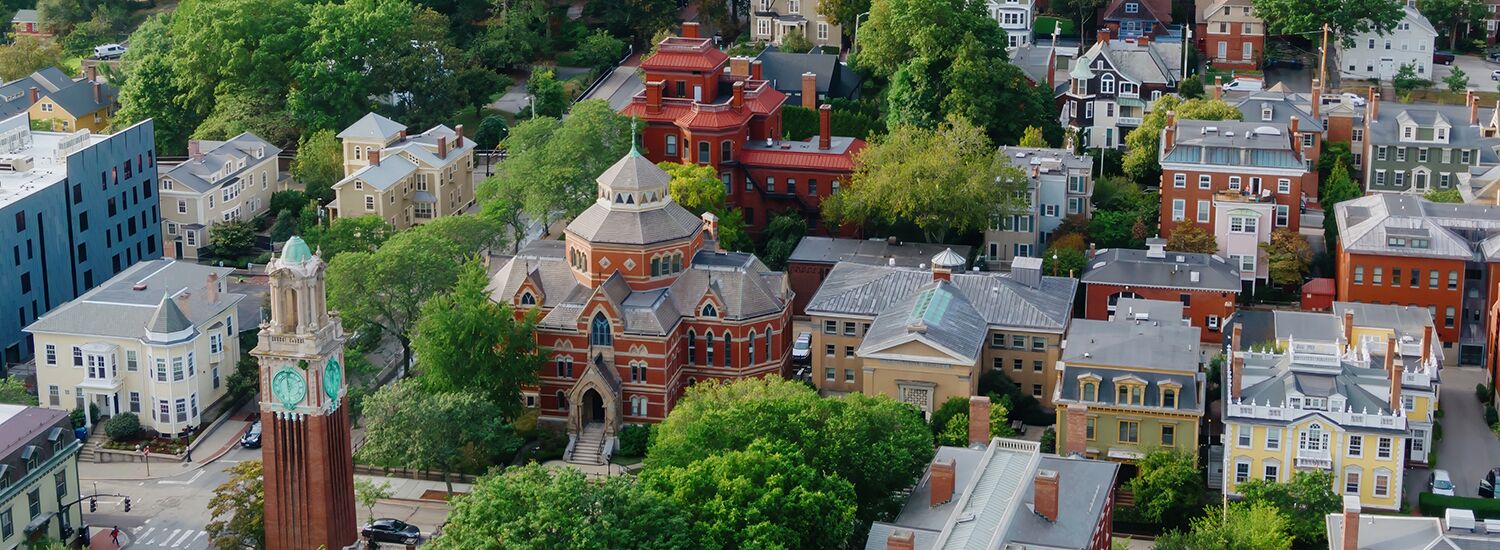
Brown University sits on College Hill in Providence, Rhode Island, the state’s capital — a midsize city with a thriving arts, food, and design scene. The campus neighbors the Rhode Island School of Design (RISD), and Boston is about an hour away by train. Students engage with the city through research, internships, and community partnerships while enjoying a close-knit campus environment.
Brown Class of 2030 — Acceptance Rate by the Numbers
While the 5.61% Brown acceptance rate for the Class of 2030 is a useful metric, it’s important to understand all the factors that make up this statistic. For starters, the number of spots available in each class stays fairly consistent year over year, so Brown application numbers are a critical factor in determining its admission rate. In other words, the higher the number of applications received, the lower the acceptance rate. We can also break this metric down by application round.
Here are the key Brown Class of 2030 statistics:
- Total applications received: 47,944
- Total admits: 2,688 (890 admitted Early Decision)
- Total enrollment for fall 2026: 1,742
It’s also useful to look at the historical data so you can get a sense of Brown’s admissions trends. This information can be found in the Common Data Set, which is released annually.
Early Decision Admission Rates for the Class of 2030
Students applying to Brown can choose from two admissions rounds: Early Decision (ED) and Regular Decision (RD). ED is binding, meaning that if you are accepted, you must withdraw all other applications you submitted and enroll at Brown. Let’s look at the Brown Early Decision acceptance rate versus the Brown Regular Decision acceptance rate for the class of 2030.
ED
- Applicants: 5,406
- Admits: 890
- Admissions rate: 16.46%
RD
- Applicants: 42,538
- Admits: 1,798
- Admissions rate: 4.23%
While the acceptance rate is higher in the ED round, the applicant pool is significantly more competitive. Most students apply RD; however, there are fewer spaces available in the class relative to the number of applicants. It’s important to consider both decision rounds carefully to decide which one makes the most sense for you.
Who Got In — Profile of Brown’s Class of 2030
The Brown class of 2030 profile reflects a diverse group of academically accomplished students from various backgrounds and geographic areas. Let’s look at Brown admitted student statistics, from test scores to Brown University demographics.
Academic Profile of the Class of 2030
The class of 2030 is the second class admitted under Brown’s reinstated test-mandatory policy, which requires most applicants to submit SAT or ACT scores. Admitted students posted strong results:
- Middle 50% SAT range: 1470–1550
- Middle 50% ACT range: 34–36
- Enrolled students in the top 10% of their high school class: 97%
Brown does not publish formal GPA requirements, but these numbers show that top grades and test scores are the baseline for competitive Brown applicants, not a differentiator. Students who fall below these ranges can still earn admission, but the rest of their application needs to make a compelling case.
Demographic Snapshot of the Class of 2030
The class of 2030 includes 19% first-generation college students — consistent with the prior year — as well as students from all 50 states, plus Washington, D.C., Puerto Rico, and the Mariana Islands. Brown saw a 16% increase in international applicants. Additionally, 73% intend to apply for financial aid.
Students were admitted from a wide range of high school settings. According to the school type breakdown, 60% of admitted students attended public high schools, 30% attended private schools, and 10% attended religious schools. For applicants, this mix is a reminder that Brown evaluates each student in the context of their school and community — there is no single profile of a successful applicant.
Brown vs. Other Ivy League Schools — Acceptance Rate Comparison
While Brown maintains an extremely low acceptance rate each year, it is not the lowest among the eight Ivy League Schools. Let’s look at Class of 2030 admissions statistics and data from previous years to see how Brown compares.
Brown admitted 5.61% of applicants to the class of 2030, or roughly one in 18. Compared with other Ivy League acceptance rates, that places Brown in the middle of the spectrum. Brown’s acceptance rate is higher than those of Columbia, Princeton, and Yale, as well as Harvard — which has not yet released its class of 2030 data but consistently has an admissions rate around or below 4%. Brown is slightly more selective than Dartmouth and Penn and considerably more selective than Cornell.
Still, the differences between Brown and the most selective Ivy League schools are small. With acceptance rates this low, every Ivy League school is a reach for every applicant — no matter how strong their credentials.
Ivy League Admissions Trends for the Class of 2030
Several broader elite university admissions trends continue to keep Ivy League admissions highly selective:
- Record application volumes: Growth in the Common App has made it easier than ever for students to apply to multiple highly selective schools, pushing application numbers to new highs while class sizes remain largely fixed.
- The return of testing requirements: Several Ivies, including Brown, have reinstated test-mandatory policies after pandemic-era test-optional periods, so strong SAT or ACT scores once again play a key role in the review process.
- A new landscape for diversity outreach: Following the Supreme Court’s 2023 decision ending race-conscious admissions, Ivy League schools have adjusted their outreach strategies to continue building diverse classes of underrepresented and first-generation students.
For applicants, these trends mean competition at Brown and its peers is unlikely to ease anytime soon. The most effective admissions strategies for Ivy League schools start with a balanced college list and a focus on what you can control: a rigorous academic record, meaningful engagement outside the classroom, and an application that shows why that school is the right fit for you.
Early Decision vs. Regular Decision at Brown — Which Is Right for You?
Brown offers two first-year application rounds: Early Decision (ED) and Regular Decision (RD). The Brown Early Decision deadline is November 1, and ED applicants typically receive their decisions in mid-December. RD applications are due January 1, with decisions released in the spring.
How ED and RD Work
The key difference between ED and RD is commitment. Early Decision is binding. When you apply ED, you are obligated to enroll at Brown if admitted. If Brown accepts you, you must withdraw all other college applications and submit your enrollment deposit. You may not apply to another school’s binding Early Decision program at the same time. RD, by contrast, is non-binding — you can apply to as many schools as you like, compare your offers, and choose where to enroll by May 1.
Does Applying Early Decision Improve Your Chances?
For the class of 2030, Brown admitted 16.46% of ED applicants compared with just 4.23% of RD applicants — an ED admission rate nearly four times higher. The ED round also shapes the class: Brown’s 890 ED admits made up about one-third of all admitted students and, because ED is binding, roughly half of the 1,742 students who enrolled. In other words, far fewer seats remain by the time Brown reviews its RD pool of more than 42,000 applicants.
Keep in mind that the ED pool is smaller and self-selected. Many of the strongest, most prepared applicants apply early, so the higher admission rate does not mean Brown lowers its standards in November. What ED does offer is a clear signal of commitment — and colleges value students who are certain they will enroll. For students who are certain Brown is their first choice and whose application is ready by November, applying early is the single most consequential part of an Ivy League early admissions strategy.
Weighing the Trade-Offs of Early Decision
Every binding Early Decision plan has pros and cons, and the advantages of ED at Brown come with real costs. Being accepted ED eliminates the ability to compare financial aid packages from multiple schools. Before committing, sit down with your family and run Brown’s net price calculator carefully to estimate what you would pay. Brown meets 100% of demonstrated financial need for all admitted students, which lowers the risk for many families, but your family should still be confident that Brown’s likely aid offer will work for you.
Timing is another consideration. An ED application reflects your record through junior year, so your first-semester senior grades and fall testing results will not factor into Brown’s early review. Students who would benefit from another semester of strong grades or a final SAT or ACT attempt may present a stronger application in the RD round.
Applying RD makes more sense if you are still deciding between Brown and other top choices, if your family needs to compare financial aid offers, or if your application will be meaningfully stronger by January. Ultimately, deciding when to apply Early Decision comes down to three questions:
- Are you sure Brown is your top choice?
- Is your application ready?
- Is your family comfortable with the financial commitment?
Brown’s Open Curriculum — What It Means for Applicants and Why It Matters
Brown’s Open Curriculum defines the academic experience and shapes what admissions officers look for in every application they read. In any Ivy League academic culture comparison, Brown stands apart: Unlike the other Ivy League schools, it has no distribution requirements and no core curriculum. Students design their own course of study across Brown University’s academic programs from their first day on campus; however, they still complete a concentration — Brown’s term for a major — and meet a writing requirement.
Brown students have the option to take courses pass/fail, or what they refer to as satisfactory/no credit, which encourages them to explore unfamiliar subjects without worrying about their GPA. That freedom comes with responsibility: They must build a coherent, challenging education for themselves, with guidance from faculty advisors.
What Brown Admissions Officers Look For
Because Brown students direct their own education, the strongest applicants are self-directed learners with a track record of pursuing interests beyond the standard high school curriculum — through independent research, summer or community college coursework, self-taught skills, or projects they started on their own.
Admissions officers also want students who can articulate a clear vision for how they would use academic freedom. Top grades in the most rigorous courses available are expected, but Brown looks for intellectual independence rather than credential chasing. An applicant who took every AP course to build a transcript will not stand out as much as one who followed a question wherever it led. Your application — especially your “Why Brown” supplemental essay — is where you can make this case most directly.
Special Programs — PLME and Brown|RISD Dual Degree
Beyond general admission, Brown University programs include a handful of combined degree programs that rank among the most selective Ivy League specialized programs. Students apply to these programs through the same application as the rest of the applicant pool, but they complete additional essays and compete for a much smaller number of seats.
Program in Liberal Medical Education (PLME)
Brown’s Program in Liberal Medical Education (PLME) is an 8-year combined bachelor’s/M.D. program that guarantees admission to Brown’s Warren Alpert Medical School. PLME students earn their undergraduate degree under the Open Curriculum — they can concentrate in any field, from biology to music — and then continue directly to medical school without navigating the traditional medical school application process.
That security makes Brown’s medical school program one of the most competitive in the country. While the Brown PLME acceptance rate varies from year to year, the typical cohort each year is 50 students, making it significantly more selective than general admission. PLME is ideal for students with a clear, long-term commitment to medicine.
Brown|RISD Dual Degree Program
The 5-year Brown|RISD Dual Degree Program allows students to earn both an A.B. from Brown and a BFA from the Rhode Island School of Design. Students take classes on both campuses, combining rigorous academic study at Brown with intensive studio work at RISD. This cohort is very small — about 20 students per year — making it one of the most selective programs in the U.S.
Applicants must be admitted by both Brown and RISD, so they need a strong academic record as well as an accomplished art or design portfolio. The Brown|RISD Dual Degree is designed for serious artists and designers who also have rigorous academic interests and want to explore how the two disciplines intersect.
If you plan to apply to either program, factor program-specific selectivity into your application strategy. Admission rates for these programs fall well below Brown’s already low general admission rate, so treat them as high reaches and build a balanced college list around them. Before you apply, ask yourself whether you would still want to attend Brown if you were admitted to the university but not to the program.
How to Strengthen Your Brown Application — Expert Tips
Nearly every student in Brown’s applicant pool has top grades and test scores, so strong academics alone won’t set you apart. So, you may wonder how to get into Brown.
Like most highly selective institutions, Brown uses a holistic admissions process that considers the student as a whole person. They want to know who you are, how you think, and why Brown is the right place for you. These Brown application tips can help you do the same.
Write Specific, Thoughtful Supplemental Essays
The Brown supplemental essays give admissions officers their clearest view of your intellectual curiosity and fit. Admissions officers read thousands of essays praising Brown’s prestige, location, and flexibility, so surface-level praise won’t stand out. Instead, demonstrate a genuine understanding of the Open Curriculum and explain how you would use it. Reference specific concentrations, courses, faculty research, or campus organizations, and connect them to interests you have already pursued.
The best Brown essay advice is to be specific. For example, rather than writing that you love Brown’s academic freedom, describe how you would combine coursework in neuroscience and philosophy to explore questions about consciousness that first captured your attention during an independent research project. Across all your essays, write in your own authentic voice. Brown wants to understand how you think, not what you believe admissions officers want to read.
Build a Focused, Authentic Profile
When it comes to extracurriculars, Brown admissions officers value depth over breadth. A long list of clubs matters less than sustained commitment and meaningful impact in a few areas. Admissions officers look for evidence of intellectual curiosity pursued outside the classroom — an independent project, additional coursework, or a creative portfolio — as well as a record of contributing to your school and community.
Above all, Brown seeks students who will thrive in a non-prescribed academic environment. Your activities should show that you take initiative, pursue questions on your own, and don’t need a set curriculum to stay engaged.
Plan Your Application Timeline
Build your college application timeline early, especially if you plan to apply Early Decision. Navigating Brown’s ED and RD rounds requires a disciplined plan that starts in 11th grade.
Phase 1: Winter and Spring (Junior Year)
- January–March: Follow one of the most overlooked college admissions tips and show genuine interest by visiting campus if you can or attending Brown’s virtual information sessions and tours. These experiences help you gather the specific details that make a “Why Brown” essay compelling — and help you determine whether Brown is truly the right fit for you.
- April–May: Line up strong recommendations before summer break. Choose teachers — ideally from junior year — who know you well and can speak to your curiosity and engagement in the classroom, not simply the teachers who gave you the highest grades. Give them plenty of notice, along with a brief summary of your interests and goals.
Phase 2: Summer (Leading into Senior Year)
- June: Brainstorm your Common App personal statement and identify the core story you want admissions officers to remember.
- July: Review Brown’s supplemental essay prompts and start drafting. Research specific concentrations, courses, and faculty so your essays reflect a genuine understanding of the Open Curriculum.
- August: Finalize complete first drafts of all your essays and confirm your fall testing plan.
Phase 3: The Critical Autumn Deadlines (Senior Year)
Is Brown the Right School for You? Fit Beyond the Acceptance Rate
Before you apply — and especially before you commit to Early Decision — ask yourself honestly: Is Brown a good fit for how you learn, what you want to study, and the kind of community you want to join?
Brown’s Distinctive Campus Culture
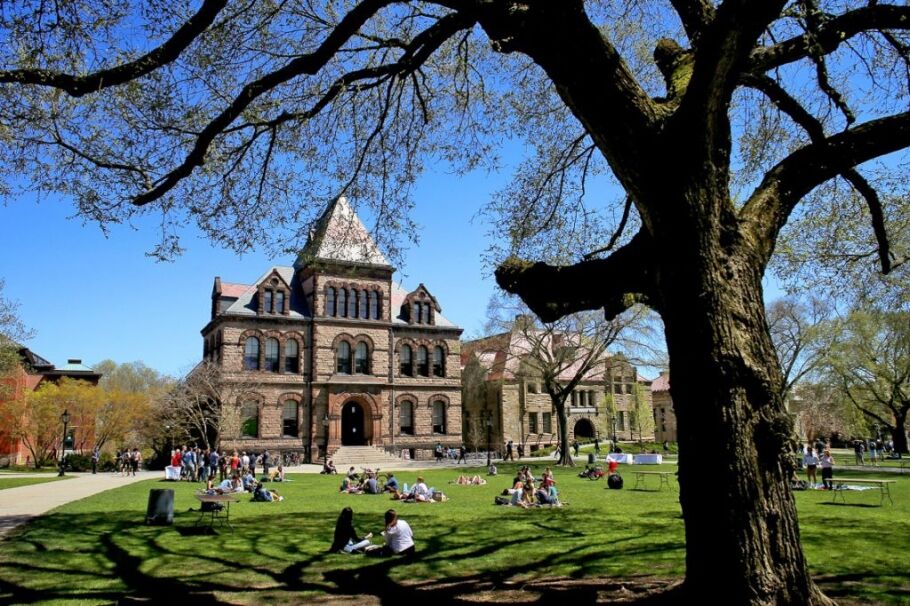
Brown’s campus culture is intellectually curious, collaborative, and notably non-competitive. The Open Curriculum’s absence of distribution requirements, along with Brown’s decision not to rank its students, shifts the focus from competing with classmates to learning alongside them. Students are encouraged to take academic risks, pursue interdisciplinary study, and even design their own independent concentrations. Brown University student life also extends beyond College Hill, and many students engage deeply with Providence and the surrounding community through research, internships, and service.
Fit Factors to Consider Beyond Selectivity
As you evaluate Brown, weigh these factors alongside the numbers:
- The Open Curriculum: Brown is best suited to self-directed learners who want to shape their own education. If you prefer structure and a clear set of requirements, a school with a core curriculum may be a better fit.
- Brown campus life in Providence: The campus sits in a vibrant college town with close ties to the arts, food, and tech scenes, and its location next to RISD adds to the creative energy on College Hill.
- Undergraduate size: With roughly 7,200 undergraduates, Brown is smaller than many of its Ivy League peers, which creates more opportunities to build relationships with professors and classmates.
- Community: Brown students often describe a strong sense of community, where collaboration and shared intellectual interests matter more than rankings or competition.
Your Brown Campus Research Checklist
Whether you’re visiting Brown’s campus in person or exploring online, use these resources to learn what life at Brown is really like:
- Take a virtual tour and attend an online information session through the Brown admission website to learn how to apply to Brown.
- Visit campus for an in-person tour or information session, or attend Brown’s on-campus and regional admission events.
- Connect with current students through Brown’s student ambassador programs to ask about academics, housing, and campus life.
- Explore departmental websites and Open Curriculum resources to identify concentrations, courses, and faculty that match your interests.
- Read “The Brown Daily Herald” for student perspectives on campus news, culture, and debates.
The more you learn about Brown, the better you can decide whether it belongs on your college list — and the stronger your application will be if it does.
Guidance for Your Brown University Application
Brown’s class of 2030 acceptance rate of 5.61% confirms that the university remains one of the most selective in the country. Still, acceptance rates tell only part of the story. The admissions process is incredibly nuanced, especially for highly selective schools like Brown, and trends can shift from year to year.
Working with an independent college admissions counselor can make all the difference in your admissions outcomes. At IvyWise, our students are 6x more likely to gain admission to Brown University than the general applicant. Our counselors are former admissions officers at top schools, including Ivy League institutions, so they know exactly what admissions committees are looking for and how to position you for success.
Get Started